
Live Earthworms: The Secret Behind High-Quality Vermicompost Production
Discover how live compost earthworms naturally transform organic waste into nutrient-rich Vermicompost and improve soil fertility for sustainable farming.
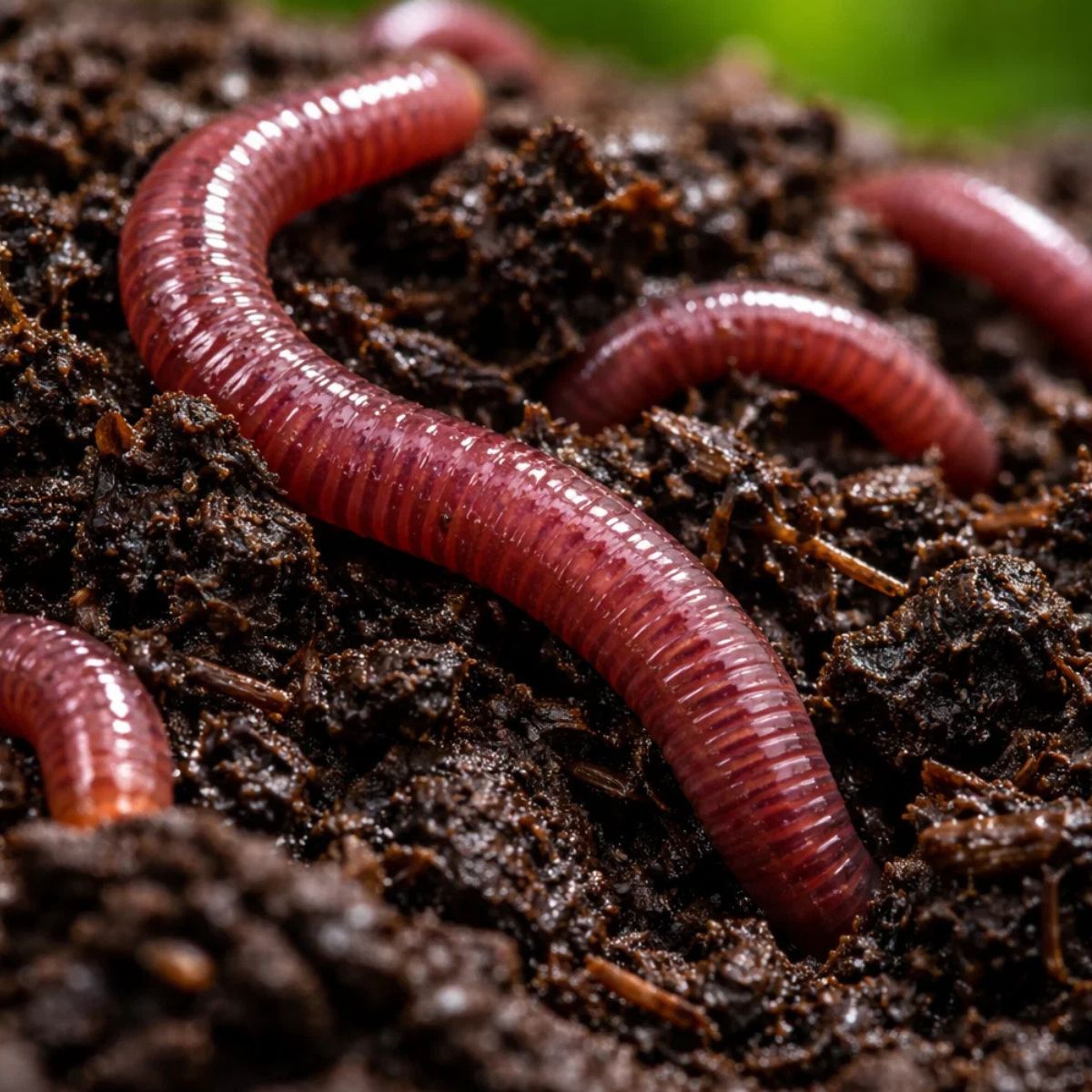
What Are Live Compost Earthworms?
Live compost earthworms are highly beneficial organisms that naturally decompose biodegradable waste and convert it into nutrient-rich Vermicompost. They consume cow dung, crop residues, dry leaves, vegetable waste, and other organic materials to create one of the finest natural fertilizers.
Their continuous movement improves soil aeration, enhances microbial activity, increases water retention, and promotes healthier root development, making them an essential part of sustainable and chemical-free farming.
Why Live Earthworms Are Important?
- ✔ Convert organic waste into premium Vermicompost.
- ✔ Improve soil structure and fertility naturally.
- ✔ Increase beneficial microorganisms.
- ✔ Enhance moisture retention in the soil.
- ✔ Promote healthy root growth.
- ✔ Reduce dependency on chemical fertilizers.
Why Are Earthworms Called Nature's Engineers?
Earthworms naturally improve soil by creating tunnels that increase air circulation, improve drainage, and allow roots to grow deeper. Their nutrient-rich castings enrich the soil with essential nutrients and beneficial microorganisms, making them one of nature's most valuable partners for organic farming.
Healthy Soil
Improve soil structure, aeration, and nutrient availability for stronger plant growth.
Organic Recycling
Convert biodegradable agricultural waste into premium-quality Vermicompost naturally.
Higher Crop Yield
Healthy soil created by earthworms leads to better root development and increased crop productivity.
Benefits of Live Compost Earthworms
Live compost earthworms are the driving force behind high-quality Vermicompost production. They naturally improve soil quality, recycle organic waste, and contribute to sustainable farming practices.
Improve Soil Fertility
Earthworms enrich the soil with nutrient-rich castings that naturally improve fertility and support healthy plant growth.
Increase Water Retention
Their tunneling activity improves soil structure, allowing better water absorption and reducing irrigation needs.
Higher Crop Yield
Healthy soil created by earthworms results in stronger roots, vigorous plants, and increased agricultural productivity.
Recycle Organic Waste
They convert biodegradable waste into premium organic Vermicompost, reducing environmental pollution.
Boost Microbial Activity
Earthworm castings contain beneficial microorganisms that improve nutrient availability and soil health.
Eco-Friendly Farming
Using live earthworms reduces dependence on chemical fertilizers and supports sustainable organic agriculture.
Popular Earthworm Species Used in Vermicomposting
Not all earthworms are suitable for Vermicomposting. A few species are highly efficient at consuming organic waste and producing nutrient-rich Vermicompost. These earthworms are widely used in commercial composting units because of their fast reproduction rate and excellent composting efficiency.
- African Nightcrawler (Eudrilus eugeniae) – Fast-growing, highly productive, and ideal for warm climates.
- Red Wiggler (Eisenia fetida) – One of the world's most popular composting worms due to its rapid composting ability.
- Indian Blue Worm (Perionyx excavatus) – Excellent for tropical regions and known for producing high-quality Vermicompost.
- European Nightcrawler (Eisenia hortensis) – Larger in size and suitable for composting as well as fishing bait.
Life Cycle of Compost Earthworms
Healthy compost earthworms reproduce quickly under suitable environmental conditions, ensuring continuous Vermicompost production.
Cocoon Stage
Earthworms lay cocoons that contain developing baby worms.
Young Worm
Young worms hatch and begin feeding on organic matter.
Adult Worm
Adult worms rapidly consume waste and reproduce continuously.
Continuous Composting
Healthy colonies continuously convert organic waste into Vermicompost.
What Do Live Earthworms Eat?
Composting earthworms feed on biodegradable organic materials. They consume soft organic waste and convert it into nutrient-rich worm castings that improve soil health.
- 🥬 Vegetable & Fruit Waste
- 🌾 Crop Residues
- 🍂 Dry Leaves
- 🐄 Cow Dung
- 🌱 Garden Waste
- ☕ Tea Leaves & Coffee Grounds
Where Are Live Earthworms Used?
Live compost earthworms play a crucial role in sustainable agriculture, organic waste recycling, and premium Vermicompost production.
Organic Farming
Improve soil fertility naturally for better crop production.
Waste Management
Convert biodegradable waste into nutrient-rich Vermicompost.
Vermicompost Units
Essential organisms for commercial Vermicompost production.
Fruit Orchards
Improve soil structure and root health.
Home Gardening
Perfect for kitchen gardens and terrace gardens.
Plant Nurseries
Produce healthy seedlings with nutrient-rich compost.
Ideal Environmental Conditions
| Parameter | Recommended Range |
|---|---|
| Temperature | 20°C – 30°C |
| Moisture | 60% – 80% |
| pH Level | 6.5 – 7.5 |
| Light | Low / Shaded Area |
| Food Source | Organic Biodegradable Waste |